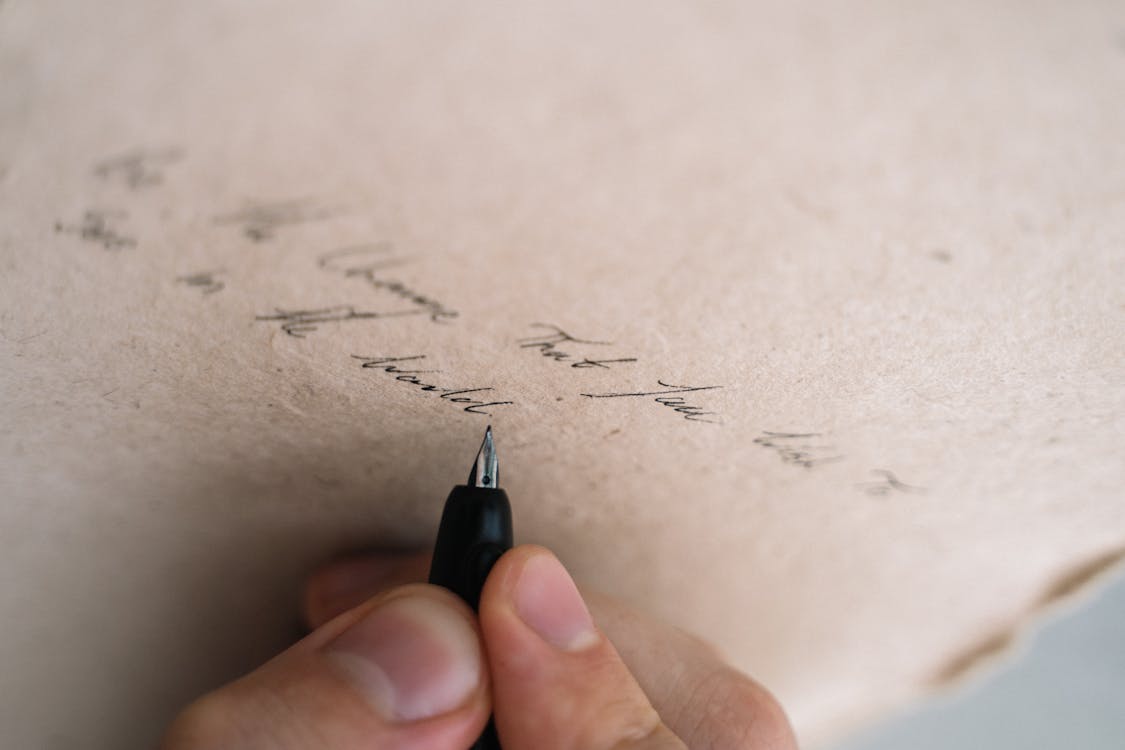

In the days and weeks after a funeral, when the shock of loss is still raw and the practical tasks feel overwhelming, the thought of writing thank you cards can seem like yet another burden. But for many families, sending a few words of heartfelt gratitude — to the people who travelled miles to pay their respects, who sent flowers, who made a donation in a loved one's name — becomes a quiet act of comfort. A way of acknowledging, together, that someone truly mattered.
There are no strict rules here. Grief doesn't follow a timetable, and no one who attended a funeral or sent flowers is sitting at home waiting for a card. But if you'd like to send funeral thank you cards and aren't sure where to start, this guide will walk you through everything: who to thank, what to write, when to send them, and how to make the process as gentle on yourself as possible.
Do You Have to Send Funeral Thank You Cards?
The short answer is no. There is absolutely no obligation to send thank you cards after a funeral. No one who attended the service, sent flowers, or made a donation did so expecting a written acknowledgement in return. They did it because they cared — about the person who died, and about you.
If the idea of writing cards feels impossible right now — because grief is too heavy, because you're managing an estate, because you simply don't have the capacity — please let that go. Your wellbeing matters far more than any social convention. No one will think less of you. No one will judge you. If someone does, that says more about them than about you.
That said, many bereaved families do find that writing thank you cards provides a small but meaningful sense of closure. It gives them a reason to sit quietly with the names of people who showed up for them, and to say — in their own words — I saw you, and it meant something.
When Should You Send Thank You Cards After a Funeral?
The traditional guidance is to send acknowledgement cards within two to four weeks of the funeral. This is a helpful framework rather than a hard rule. If you're still writing cards six weeks or even three months later, that is perfectly fine. Most people understand that grief takes time, and a card received later than expected still carries the same warmth.
If you know there will be a delay, you might ask a trusted friend or family member to help you manage the process — collecting names and addresses, organising cards into groups, or even helping with the writing if that feels right to you.
Who Should You Thank?
Start by making a list. It helps to divide people into categories so the task feels more manageable.
Funeral Attendees
You don't need to send a card to every single person who attended, particularly if the service was large. Focus on those whose presence was especially meaningful — people who travelled a long distance, those who gave a reading or eulogy, pallbearers, and close friends or colleagues who took time away from work to be there.
Flower Senders
Floral tributes are a deeply traditional expression of sympathy in the UK, and those who sent flowers — whether for the service or to your home — deserve acknowledgement. A short, warm note is entirely appropriate.
Donation Makers
If the family requested charitable donations in lieu of flowers — or in addition to them — a thank you note to those who donated is a kind gesture. You don't need to mention specific amounts, but acknowledging that their contribution will make a difference in the name of your loved one is meaningful.
The Funeral Director
This one is often overlooked, but funeral directors — particularly those who go above and beyond to support a family — genuinely appreciate a note of thanks. They are professionals who dedicate their lives to caring for families during the hardest of times, and a word of gratitude is never wasted. NAFD-accredited funeral directors take immense pride in the care they provide, and knowing that it made a difference to a family is something they cherish.
The Celebrant or Officiant
Whether the service was led by a religious minister, a humanist celebrant, or a civil celebrant, the person who conducted the funeral spent time getting to know your loved one through you — listening to stories, crafting a tribute, holding space for your grief. A thank you card for a celebrant is always warmly received.
Caterers and Wake Hosts
If someone hosted a wake at their home, or if a venue's staff went to particular effort, a note of thanks is a lovely touch. The same applies to anyone who baked, organised food, or helped coordinate the gathering after the service.
Neighbours, Colleagues, and Others
Think about anyone who offered practical support: neighbours who accepted deliveries, colleagues who covered responsibilities so you could focus on arrangements, friends who organised a meal rota. A simple card acknowledging their kindness can mean a great deal.
What to Write: Wording Templates for Different Situations
You don't need to find profound words. Simple, genuine, and personal is always better than elaborate and formal. Here are some wording templates you can adapt.
General Thank You to a Funeral Attendee
"Dear [Name],
Thank you so much for being with us at [Name]'s funeral. It meant more than words can say to have you there, and your kindness and support during this time have been a real comfort to us all.
With love and gratitude,
[Your name]"
Thank You for Flowers
"Dear [Name],
Thank you so much for the beautiful flowers. They brought such warmth to the service, and it was a touching reminder of how much [Name] was loved. Your thoughtfulness has been a great comfort to us.
With warmest thanks,
[Your name]"
Thank You for a Charitable Donation
"Dear [Name],
Thank you so very much for your generous donation to [Charity Name] in memory of [Name]. It would have meant so much to [him/her/them], and knowing that something good will come from this loss brings us real comfort. Your kindness is deeply appreciated.
With grateful thanks,
[Your name]"
Thank You to the Funeral Director
"Dear [Name],
We wanted to write and thank you sincerely for the care and compassion you showed our family during the funeral arrangements for [Name]. Everything was handled with such dignity and sensitivity, and you helped us to give [him/her/them] the farewell they truly deserved. We are so grateful.
With sincere thanks,
[Your name]"
Thank You to a Celebrant or Minister
"Dear [Name],
Thank you so much for the beautiful service you led for [Name]. The way you captured [his/her/their] life and character was truly moving, and so many people commented on how perfectly it reflected who [he/she/they] was. We are deeply grateful for the care and thought you put into it.
With warm thanks,
[Your name]"
Thank You to Someone Who Hosted the Wake
"Dear [Name],
We wanted to thank you so much for opening your home to us after the funeral. Your generosity and kindness made such a difference, and it gave us all such a lovely chance to be together and share memories of [Name]. We are so very grateful.
With love,
[Your name]"
Handwritten vs. Printed Cards: What's Best?
In an ideal world, a handwritten note feels the most personal and meaningful. Even a few handwritten lines added to a pre-printed card add a human touch that a purely printed message cannot replicate.
However, we don't always live in an ideal world. If writing is physically difficult, if you have dozens of cards to send, or if grief makes the act of writing feel impossible, pre-printed acknowledgement cards are entirely appropriate and widely used.
Pre-Printed Acknowledgement Cards
These are cards that carry a standard message of thanks, often something like: "The family of [Name] wish to thank you sincerely for your kind sympathy and support." You can order these from many funeral directors, stationers, and online suppliers. Some families include a small photograph of the deceased, which makes the cards feel especially personal.
Many NAFD member funeral directors can help you arrange acknowledgement cards as part of their wider family support services — don't hesitate to ask.
A Practical Approach
- Use pre-printed acknowledgement cards for larger groups (all attendees, for example)
- Write more personal notes for those who played a specific role — the celebrant, a reader, someone who travelled far
- Add even a single handwritten sentence to pre-printed cards where you can: "Your presence meant so much to us."
- Ask a trusted family member or friend to help you address envelopes if writing feels overwhelming
Keeping Track: A Simple Checklist
Organisation can take some of the stress out of the process. Before you begin writing, try to gather:
- A list of attendees — the funeral director or a family member may have kept a record, or you can ask the venue
- Flower card messages — these typically include the sender's name and sometimes address
- Donation records — many charities will notify you of donations made in memory; JustGiving and other platforms also keep records
- Names and addresses of key individuals — celebrant, funeral director, caterers
- A notebook or spreadsheet to tick off cards as you write and post them
Don't try to do this all at once. Sit down for twenty minutes, write a few cards, and then stop. There is no rush.
A Note on Grief and Gratitude
Writing thank you cards after a funeral is, in its own quiet way, an act of love. It's a chance to reflect on the community that surrounded your loved one — the lives they touched, the friendships they built, the people who will carry their memory forward. Some families find that, far from being a chore, sitting with those names and writing those notes becomes one of the more tender parts of the grieving process.
Whatever you decide — whether you write fifty cards or none at all — please be gentle with yourself. The people who came to that funeral already know you are grateful. You showed them that simply by being there.
If you're still in the process of making funeral arrangements, or if you'd like support from a professional funeral director who genuinely cares about your family's experience, you can find an NAFD-accredited funeral director near you using our directory. Every member of the NAFD adheres to a strict Code of Practice, giving you confidence and peace of mind at every step.