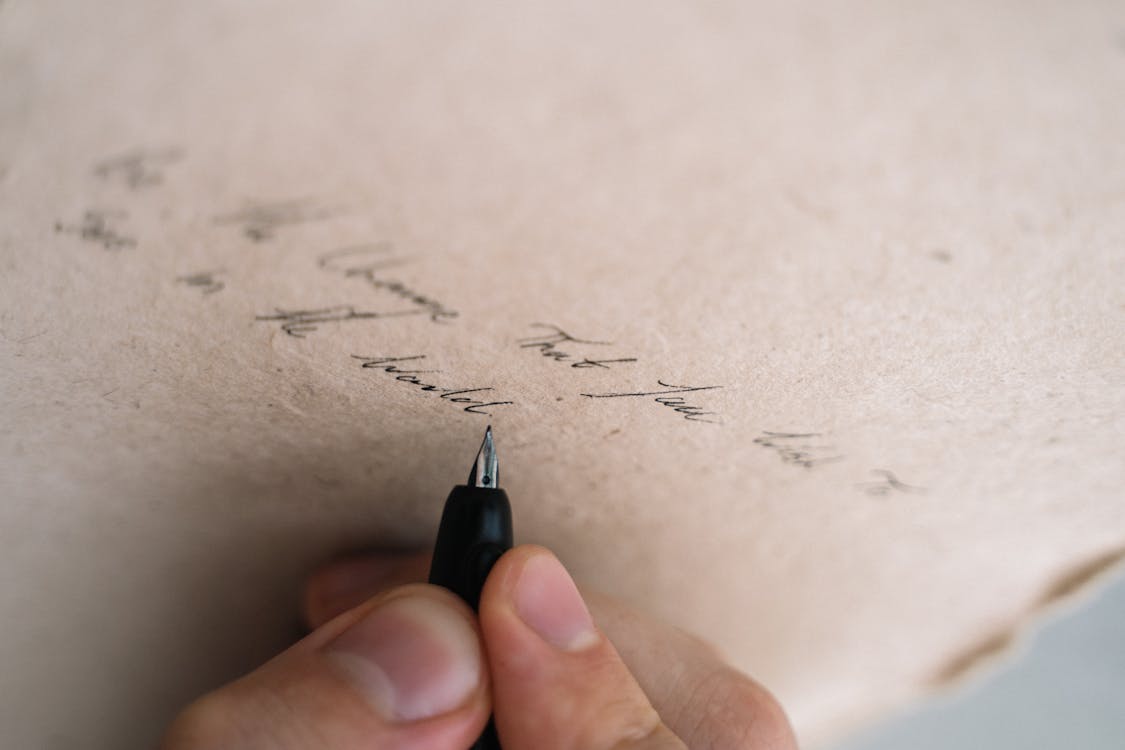

When someone you love dies, words can feel impossibly inadequate. Yet a small card tucked into a floral tribute carries enormous weight — it tells a grieving family that their loved one mattered, that they were seen, and that they are not alone in their grief. If you're staring at a blank card wondering what on earth to write, you're not alone. This guide will help you find the right words, whatever your relationship to the person who has died.
Why Funeral Flower Messages Matter
Funeral flowers serve a dual purpose. They are a visual expression of love and respect at the service itself, and the accompanying cards often become treasured keepsakes that families return to in the weeks and months that follow. Many bereaved families keep their flower cards long after the petals have faded — so even a short, sincere message can bring lasting comfort.
There is no single "right" thing to write. The most meaningful messages are honest, personal, and come from the heart. This guide gives you a framework and plenty of examples, but the best message will always be one that sounds like you.
How Long Should a Funeral Flower Message Be?
Most florists provide small cards — roughly the size of a business card — so brevity is both practical and appropriate. Aim for two to five lines. You don't need to summarise a lifetime of love in a few sentences; a simple, genuine sentiment is more powerful than an elaborate passage that strains to cover everything.
What to Write on Funeral Flowers: Short Messages for Cards
The following messages are suitable for a wide range of relationships and can be adapted to suit the person who has died and your connection to them.
Simple, Universal Messages
- "With deepest sympathy and love, always in our hearts."
- "Forever in our thoughts. Rest peacefully."
- "With love and fond memories. Gone but never forgotten."
- "In loving memory. You will be dearly missed."
- "Our thoughts are with you and your family at this sad time."
- "With heartfelt sympathy. Remembering [Name] with love."
Slightly More Personal Messages
- "[Name] touched so many lives. We are grateful to have known them."
- "A life well lived, a soul deeply loved. Rest now."
- "Memories of [Name] will stay with us always. With all our love."
- "The world is quieter without you in it. Thank you for everything."
Funeral Flower Messages for Specific Relationships
Tailoring your message to reflect your particular bond with the person who has died — or with the bereaved family — makes a card feel far more personal and meaningful.
For a Parent
- "To the best mum in the world. Thank you for a lifetime of love. We will carry you with us always."
- "Dad — your strength, kindness, and laughter shaped everything we are. Love you forever."
- "No words can express how much we will miss you, Mum. You were our whole world."
- "A devoted father and grandfather. Your love will echo through generations."
For a Spouse or Partner
- "My love, my best friend, my everything. Until we meet again."
- "Forty years together were never enough. You are my heart, always."
- "Thank you for a life filled with love and laughter. Rest now, my darling."
For a Friend
- "A true friend and one of a kind. The fun we had — I wouldn't trade a moment. Miss you already."
- "You were the kind of friend who made everything better. I am so lucky to have known you."
- "To my dearest friend — thank you for the memories, the laughter, and the love. Always with me."
For a Grandparent
- "Grandma — your stories, your cooking, your hugs. We will hold them all close. With all our love."
- "Grandad, you were our rock and our hero. Sleep well. We love you so much."
- "A wonderful grandparent who filled our childhood with warmth and wisdom. Forever in our hearts."
For a Colleague
- "A valued colleague and a genuinely good person. The office will not be the same without you."
- "With deepest sympathy from everyone at [Company Name]. [Name] was a true pleasure to work alongside."
- "We were lucky to know [Name] — professionally and as a friend. Thinking of you and your family."
For a Child or Young Person
Writing a message for a child's funeral is one of the most painful things imaginable. Keep it gentle, simple, and honest.
- "A little soul who brought so much light. Forever loved, forever missed."
- "[Name], you were so very loved. The world is a better place for having had you in it."
- "To [Name]'s family — there are no words. Holding you in our hearts."
Religious and Faith-Based Funeral Flower Messages
If the person who died held a strong faith, or if you share that faith, a message that reflects those beliefs can be deeply meaningful.
Christian Messages
- "In God's loving care now and always. Rest in His peace."
- "'I am the resurrection and the life.' John 11:25. With love and faith."
- "Called home to God. Until we meet again in His light."
Jewish Messages
- "May their memory be a blessing. With deepest condolences."
- "Zichrono/Zichronah livracha — may their memory be for a blessing."
Islamic Messages
- "Inna lillahi wa inna ilayhi raji'un. Truly, we belong to Allah, and to Him we shall return. With heartfelt condolences."
Non-Religious and Secular Messages
- "Those we love don't go away — they walk beside us every day."
- "What we have once enjoyed, we can never lose. All that we love deeply becomes part of us."
- "A life fully lived is a gift to all who shared it. Thank you, [Name]."
What to Avoid Writing on Funeral Flower Cards
Knowing what not to write is just as helpful as knowing what to say. Avoid the following:
- Clichés that can feel hollow: Phrases like "everything happens for a reason" or "they're in a better place" may be well-intentioned but can feel dismissive of grief, particularly if the bereaved family doesn't share those beliefs.
- Making it about yourself: A brief acknowledgement of your own sadness is fine, but the focus should remain on the person who died and the family left behind.
- Uncertain details: If you're not sure of the person's age or a key detail, leave it out rather than risk getting it wrong.
- Humour — unless you are certain: A light touch can be beautiful if it genuinely reflects the person who died and the family would welcome it. But err on the side of sincerity if you are unsure.
- Negative sentiments: Even if the deceased had a complicated life or relationships, a funeral tribute is not the place for ambivalence.
- Very long messages: If you have a great deal to say, consider writing a longer letter to send to the family separately.
Types of Funeral Flowers and Their Meanings
In the UK, certain flowers carry traditional associations with mourning and remembrance. Choosing flowers thoughtfully can add an extra layer of meaning to your tribute.
- White lilies: The most common funeral flower in the UK, symbolising the restored innocence of the soul and the transience of life.
- White roses: Represent purity, reverence, and a love that endures beyond death.
- Chrysanthemums: In the UK and much of Europe, white chrysanthemums are strongly associated with funerals and represent grief and loss.
- Carnations: Long-lasting and affordable, white carnations symbolise pure love; red carnations express deep admiration.
- Gladioli: Their tall, upright stance represents strength of character — a popular choice for tributes celebrating a life well lived.
- Forget-me-nots: Their very name says it all — a symbol of remembrance and lasting affection.
- Sunflowers: Increasingly popular at modern funerals, sunflowers represent loyalty, warmth, and a life that brought sunshine to others.
- Freesias: Fragrant and delicate, freesias are associated with innocence and thoughtfulness.
Many families request specific flowers or colours in the funeral notice, so always check before ordering if possible.
Types of Funeral Flower Arrangements
The type of arrangement you choose affects where it will be placed and how it is presented at the service.
- Wreaths: Circular arrangements symbolising eternity — a traditional choice for immediate family tributes.
- Sprays: A flat, fan-shaped arrangement often placed on top of the coffin.
- Posies: Small, round, hand-held bouquets — a gentle and personal tribute.
- Letterform tributes: Flowers arranged to spell out a name or a word such as "MUM" or "DAD" — very common in the UK and deeply personal.
- Loose bouquets: A more natural, relaxed arrangement that can feel less formal and more personal.
How to Order Funeral Flowers in the UK
- Find out the family's wishes: Check the funeral notice or death announcement — many families now request donations to charity in lieu of flowers, or may specify a preferred florist.
- Contact a local florist early: Funeral flowers are usually prepared at short notice. Contact a florist as soon as you know the funeral date and time.
- Confirm delivery details: Flowers should typically be delivered directly to the funeral home or chapel of rest on the morning of the service. Your NAFD-accredited funeral director can advise on the best time and address for delivery.
- Choose your arrangement and flowers: Work with your florist to select blooms, colours, and a style that reflects your relationship and the person who has died.
- Write your card message: Use this guide to craft a sincere, personal message. Many florists will print the card for you, or you can write it by hand for a more personal touch.
- Confirm your budget: Funeral flower tributes in the UK range from around £30 for a simple bouquet to £150 or more for a large letterform or wreath. Discuss your budget openly with your florist.
If you're unsure about any aspect of the arrangements, the funeral director co-ordinating the service will be happy to advise. NAFD member funeral directors are experienced in supporting families and their guests through every detail of a funeral, including flower arrangements and tributes.
A Final Word
There is no perfect message — only an honest one. Whether you write three words or five lines, what matters most is that it comes from a place of genuine care. The family receiving your tribute will know you took the time to think of them, and that is a gift in itself.
If you need support finding a trusted funeral director who can help co-ordinate tributes and guide you through the arrangements, use our directory to find an NAFD-accredited funeral director near you. Every NAFD member upholds a strict Code of Practice, so you can be confident you're in caring, professional hands.